
British Shorthair Grooming in Lucknow
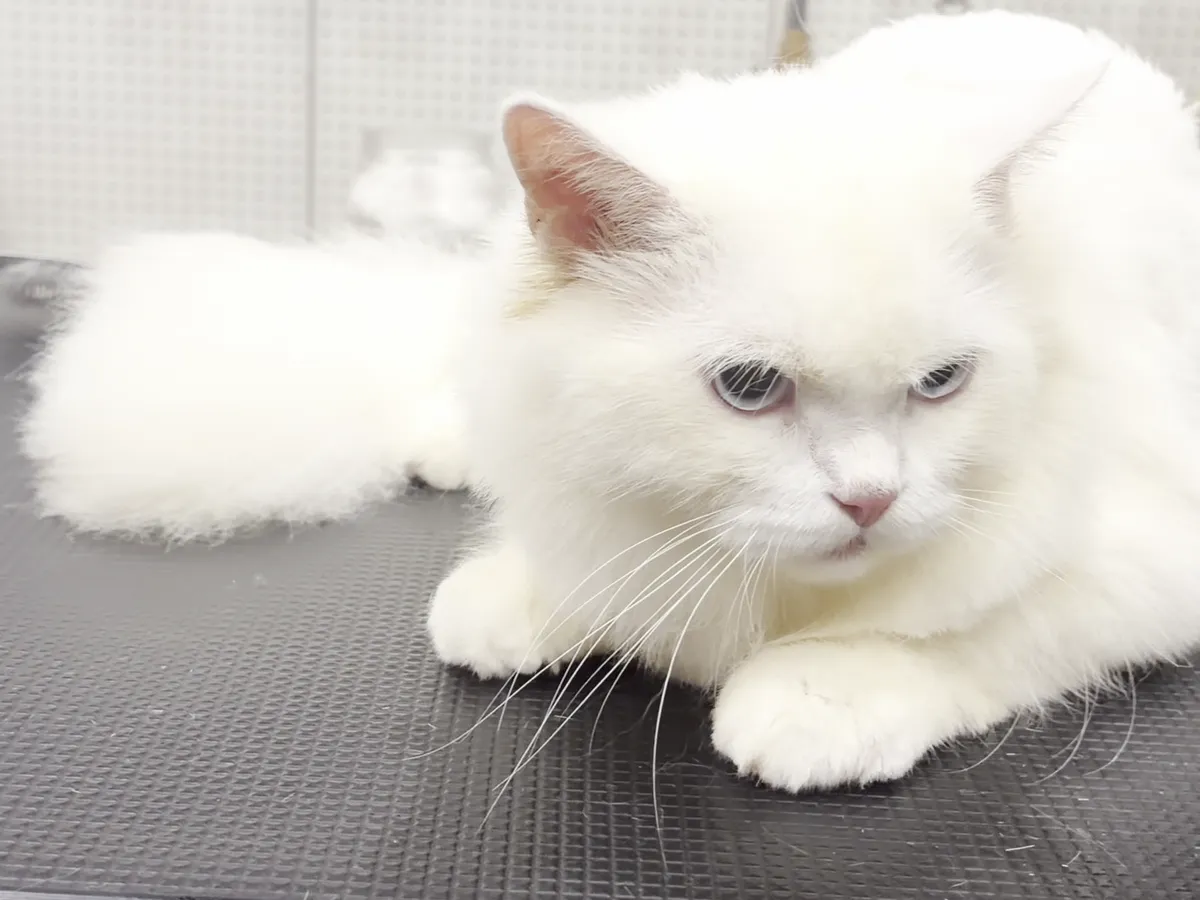
British Shorthair grooming is mostly about managing shedding. The coat is short but very dense and plush, it sheds heavily at the change of seasons, and it rarely needs a bath. A weekly brush at home, regular nail trims and the occasional professional brush-out are usually all a British Shorthair needs. Our cat grooming in Lucknow covers all of this in one visit.
For British Shorthair grooming prices, call or WhatsApp us on +91 73888 86960 (message us on WhatsApp).
A short coat with a lot of fur
The British Shorthair’s coat feels thick and springy, almost like a soft carpet. That plush texture comes from a dense undercoat packed in close to the skin. It doesn’t tangle the way a long coat does, but it holds a lot of loose hair, and when it moults, it moults a lot.
In Lucknow, the heaviest shed usually comes as the weather warms up after winter. Indoor cats living with fans, air conditioning and artificial light often shed steadily through the rest of the year as well. Our cat shedding guide explains why. For a short coat that sheds far less, compare our Bengal cat grooming page.
Brushing a dense, plush coat
- Use a rubber mitt or brush for everyday brushing. It lifts loose hair without dragging on the skin, and most cats enjoy it.
- Follow with a fine metal comb to pull out the loose undercoat the brush leaves behind.
- Brush with the direction of the fur. A dense coat can feel stiff if you go against it.
- Go easy with de-shedding tools. Used too hard or too often, they can scratch the skin and thin the coat.
Once a week is enough most of the year. During a heavy shed, a few minutes every day or two keeps hair off your furniture and out of your cat’s stomach, which means fewer hairballs.
Baths: rarely needed
A healthy British Shorthair keeps itself clean, so baths are the exception. One may be worth it if the coat turns greasy, if your cat has got into something, or if an older or heavier cat can no longer reach its back and hind quarters.
If a bath is needed, the dense coat takes a while to dry, so drying it thoroughly matters in humid weather. Our guide on how often to bathe a cat has more detail.
Weight, age and grooming help
British Shorthairs are calm, stocky cats that put on weight easily, especially indoors. A heavy cat can’t twist round to clean its lower back, belly and the area under the tail, and the coat there can turn greasy or flaky. Older British Shorthairs often slow down for the same reason, with stiffer joints.
If you notice dandruff-like flakes along the back or soiling under the tail, your cat probably needs a hand. Gentle brushing of those areas helps, and your vet can advise on a healthy weight. A cat that suddenly stops grooming should always see a vet.
Nails, ears and eyes
Indoor British Shorthairs don’t wear their claws down, so trim them every few weeks (our cat nail trimming guide shows how). Check the ears weekly and wipe only the visible outer part. The round face can collect a little crust at the corners of the eyes, which a damp pad clears easily. Redness, discharge or a bad smell is a reason to check with your vet.
Signs your British Shorthair needs a groom
- Tufts of loose hair come away when you stroke your cat.
- Hair builds up quickly on sofas, bedding and clothes.
- Your cat brings up more hairballs than usual.
- Claws catch on fabric or click on the floor.
- There’s a greasy or flaky patch along the lower back.
Booking British Shorthair grooming in Gomti Nagar
A professional brush-out during the heavy shedding season, with a nail trim and ear check, keeps most British Shorthairs comfortable. Our studio is at 3/31, Vinay Khand 3, Gomti Nagar, open every day from 10AM to 8PM, and you can wait in the cafe while your cat is groomed. See our main cat grooming in Lucknow page for everything a cat groom covers.
Frequently Asked Questions
Do British Shorthairs need baths?
Rarely. A healthy British Shorthair keeps its coat clean with brushing and its own grooming. A bath is only worth it if the coat gets greasy or dirty, or if your cat can no longer reach parts of its body.
Why is my British Shorthair shedding so much?
The dense coat sheds heavily at the change of seasons, often as the weather warms up. Indoor cats can shed through much of the year too. Weekly brushing, and more during a heavy shed, clears most of the loose hair. Bald patches or sore skin are a reason to see your vet.
What brush is best for a British Shorthair?
A rubber grooming mitt or brush works well for everyday use, followed by a fine metal comb to lift out loose undercoat. Go gently with de-shedding tools so you don't scratch the skin.
Book your British Shorthair's groom
Tell us whether your cat is in a heavy shed and how it copes with handling, and we'll find a calm slot.
3/31, Vinay Khand 3, Gomti Nagar, Lucknow, Uttar Pradesh 226010 · Grooming & Pool: 10AM–8PM · Cafe: 12PM–10PM