
How to Brush Your Dog: A Guide for Every Coat Type
Written by the PawPup grooming team · Published · Updated
How to brush your dog depends on its coat. Use a rubber curry mitt or bristle brush on short coats, an undercoat rake and slicker brush on double coats, and a slicker brush plus a metal comb on long, silky and curly coats. Whatever the coat, brush down to the skin in small sections, not just over the top.
This guide goes coat by coat, with the brush types to use, a simple technique called line brushing, and the hidden spots where mats start. It is the same approach our team uses for dog grooming in Lucknow. Not sure which coat your dog has? Start with our guide to double and single coats.
How to brush your dog: the brush types you’ll need
- Slicker brush: fine wire pins on a flat pad. Good for removing loose hair and small tangles on most medium and long coats. Use a light hand so the pins don’t scratch the skin.
- Bristle brush: soft, close bristles that smooth short coats and spread natural oils for shine.
- Undercoat rake: long, rounded teeth that reach into a thick undercoat and lift out dead fluff.
- Metal comb: a wide-and-narrow-toothed comb for checking your work. If the comb glides through to the skin, the coat is tangle-free.
- Rubber curry mitt: a glove or pad with soft rubber nubs that loosens dead hair on short coats and doubles as a massage.
Our guide to dog grooming tools at home explains each tool in more detail, including what to look for when buying one.
Line brushing: the technique that prevents mats
Most tangles survive because we brush only the top layer. Line brushing fixes that.
- Start at a lower part of the body, such as a back leg.
- With one hand, push the coat up to make a “line” or parting where you can see the skin.
- Brush the hair below the line down and away from the skin, in short strokes.
- Move the line up a little, let down a new layer of hair, and repeat.
- Work up the body in layers, then check each area with the metal comb.
It feels slow at first, but it is the only way to reach the hair close to the skin, which is exactly where mats form.
Short and smooth coats
Breeds like the Doberman, Pug, Beagle, Labrador, Rottweiler, smooth Dachshunds and most Indie dogs have short hair that never mats. Rub a rubber curry mitt in small circles to loosen dead hair, then finish with a bristle brush in the direction the hair grows. A weekly brush is usually enough. The Labrador, Rottweiler, Beagle and Pug carry a short undercoat, so brush more often when they are shedding heavily.
Double coats
The Husky, German Shepherd, Golden Retriever, Pomeranian and Indian Spitz need the undercoat cleared out, not just the top smoothed. Line brush with an undercoat rake to pull out loose fluff, then go over the coat with a slicker brush and finish with the comb. Brush a few times a week, and more during a seasonal shed. Never use a rake so hard that it scrapes the skin. Our dog shedding guide has more help for the fluffy months.
Long, silky coats
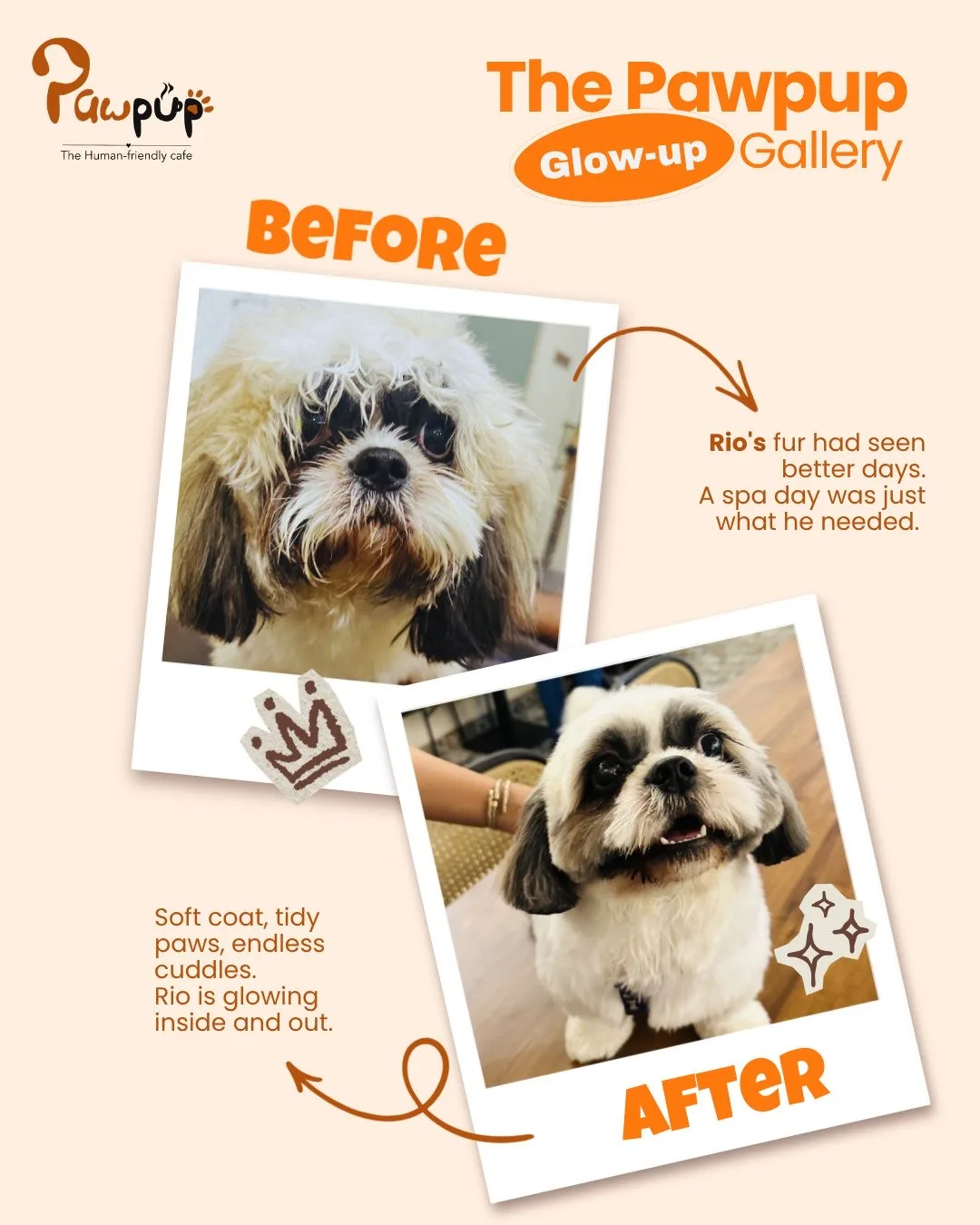
The Shih Tzu, Lhasa Apso, Maltese, Yorkshire Terrier, the feathering on a Cocker Spaniel and long-haired Dachshunds all tangle easily. Line brush with a slicker brush using gentle strokes, then comb through. Hold the hair near the skin when you meet a knot so you don’t pull. Brush most days, or keep the coat in a shorter trim if daily brushing is hard to manage.
Curly coats
A Poodle’s curls hold on to every loose hair, so mats can build quietly under a coat that looks fine on top. Line brushing with a slicker brush is essential, followed by a metal comb right to the skin. Brush most days and keep up with regular clips, as a shorter coat is much easier to keep mat-free.
Wire coats
Wire-haired Dachshunds have a harsh, wiry top coat. Brush with a slicker brush and comb through once or twice a week to remove loose hair and debris. Wire coats are sometimes hand-stripped, which is a specialist job, so Call or WhatsApp us on +91 73888 86960 to ask before booking.
Where mats hide
Even well-brushed dogs get knots in these spots, so check them every time:
- Behind and under the ears
- Under the collar or harness
- In the armpits and on the inside of the front legs
- The belly, groin and between the back legs
- Around the tail base and the “trousers” on the back legs
- Between the toes and paw pads
If you find a tight mat close to the skin, don’t cut it with scissors. Our guide to matted dog hair explains how to handle it safely, or let a groomer take care of it.
Make brushing pleasant
Keep sessions short, brush when your dog is tired after a walk, and reward calm behaviour. Always brush before a bath, as water tightens tangles. If your dog finds brushing stressful, our guide to grooming anxious dogs has gentle ways to build up.
Frequently Asked Questions
How often should I brush my dog?
It depends on the coat. Short, smooth coats are fine with a weekly brush. Double coats need brushing a few times a week, and more often during a heavy shed. Long and curly coats need brushing most days to stay tangle-free.
Why does my dog still have mats if I brush every day?
Usually because the brush is only going over the top of the coat. Mats form close to the skin, so part the hair and brush in sections from the skin outwards, then check with a metal comb. If the comb catches, that spot still needs work.
Should I brush my dog before or after a bath?
Before. Water tightens tangles, so brush and comb the coat out first. After the bath, dry the coat fully and give it a final brush once it's dry.
Can a groomer help if my dog's coat is already badly tangled?
Yes. At PawPup Cafe we offer Knot Removal at ₹200 and Knot Buster at ₹500, both including taxes, and the Shed Relief add-on at ₹400 for heavy shedding.
Book your visit
Message us on WhatsApp or give us a call to pick a slot. Weekends fill up first, so booking ahead helps.
3/31, Vinay Khand 3, Gomti Nagar, Lucknow, Uttar Pradesh 226010 · Grooming & Pool: 10AM–8PM · Cafe: 12PM–10PM